
Drone-based polarimetric measurements to investigate light pollution in greenhouses
The G-MAX company participated in the project as a supporting partner, contributing to the development of the technological background and data collection.
The results were published in the international scientific journal Remote Sensing under the title “Drone-Based Polarimetric Analysis of Greenhouses as Sources of Polarized Light Pollution”.
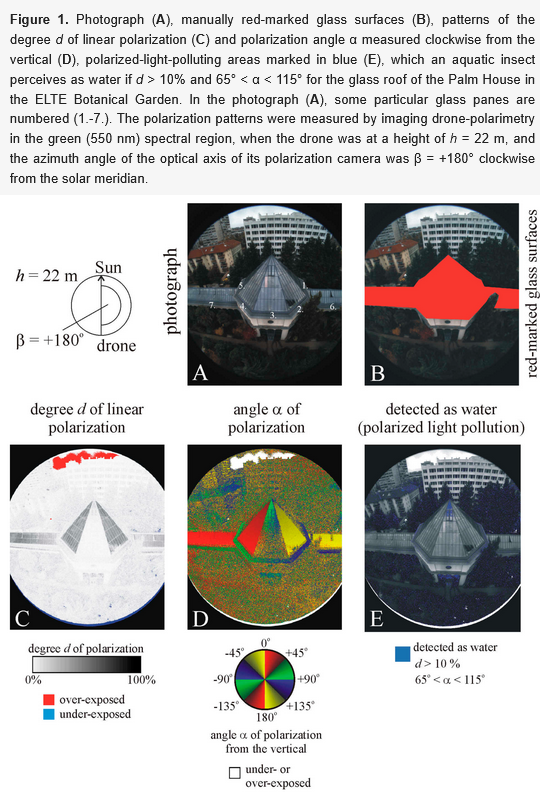
Researchers at Eötvös Loránd University (ELTE) have developed a new drone-based measurement method for greenhouse gases. polarized light pollution The leader of the research Peter Takacs, a colleague at the Department of Biological Physics at ELTE, and the study is Remote Sensing published in an international scientific journal.
Background
Greenhouses are large, artificially lit glass and foil-covered structures whose nighttime light emission has several environmental impacts. polarized component is particularly important because the directional oscillation of light waves (linear polarization) is responsible for many aquatic insect species for it imitates the light reflected from natural water surfaces. This ecological trap results: insects are attracted to greenhouses and die there, which can have a negative impact on the ecosystem at the population level.
Methodology
The researchers multispectral polarimetric camera assembled drone platform, which allows for spatial measurement of light intensity, degree of polarization (DoLP) and direction (AoP). By optimizing flight altitude and trajectory geometry, three-dimensional polarization maps can be made that show the spatial distribution of polarization patterns in the greenhouse environment.
During the measurements, recordings were made at different times of the day, under different lighting conditions, and above several greenhouses. During the data analysis polarimetric image processing algorithms and static field validation were also used to compare drone and ground measurements.
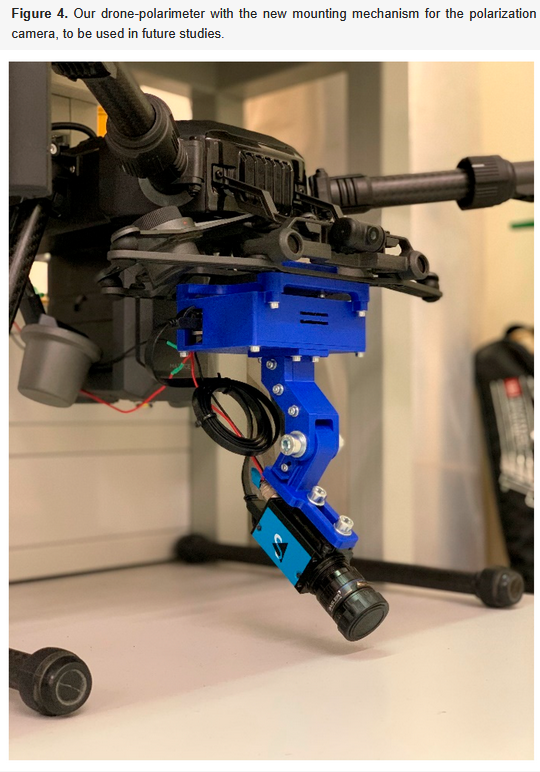
The images above are part of the following study:
Reflection–Polarization Characteristics of Greenhouses Studied by Drone-Polarimetry Focusing on Polarized Light Pollution of Glass Surfaces
The full study can be read at the following link:
Social media appearances:
Twitter: https://x.com/remotesens_mdpi
Facebook: https://www.facebook.com/RemoteSensingOA/
LinkedIn: https://www.linkedin.com/company/remote-sensing-mdpi/

